
The Flex Learn Focus
Parents' Tips
Simple, practical advice for parents supporting learning at home.

Homework
Stop Being the Homework Cop: Why Playing the "Clueless Intern" Transforms Study Time
End nightly homework battles by becoming your child's "clueless intern." Discover how role reversal boosts learning, confidence, and calm at the kitchen table.
Read the article
SAT & Test Prep
Navigating the Digital SAT: An Educator’s Blueprint for Strategy, Pacing, and Success
Master the Digital SAT with our 12-week study plan, timed pacing tactics, test examples, and free parent resources from Flex Learn Tutoring LLC.
Read the article
Parents' Tips
Why Counting on Fingers Isn’t a Bad Habit: Building True Number Sense in K–3
Discover why counting on fingers builds strong K–3 math skills, why timed drills backfire, and three simple ways to boost number sense at home.
Read the article
Reading
Why "Sound It Out" Doesn't Always Work: 3 Science of Reading Shifts Fairfield County Parents Can Use at Home
Science of Reading shifts for K–3 families: map sounds to letters, slide sounds smoothly, and separate decoding practice from read-alouds
Read the article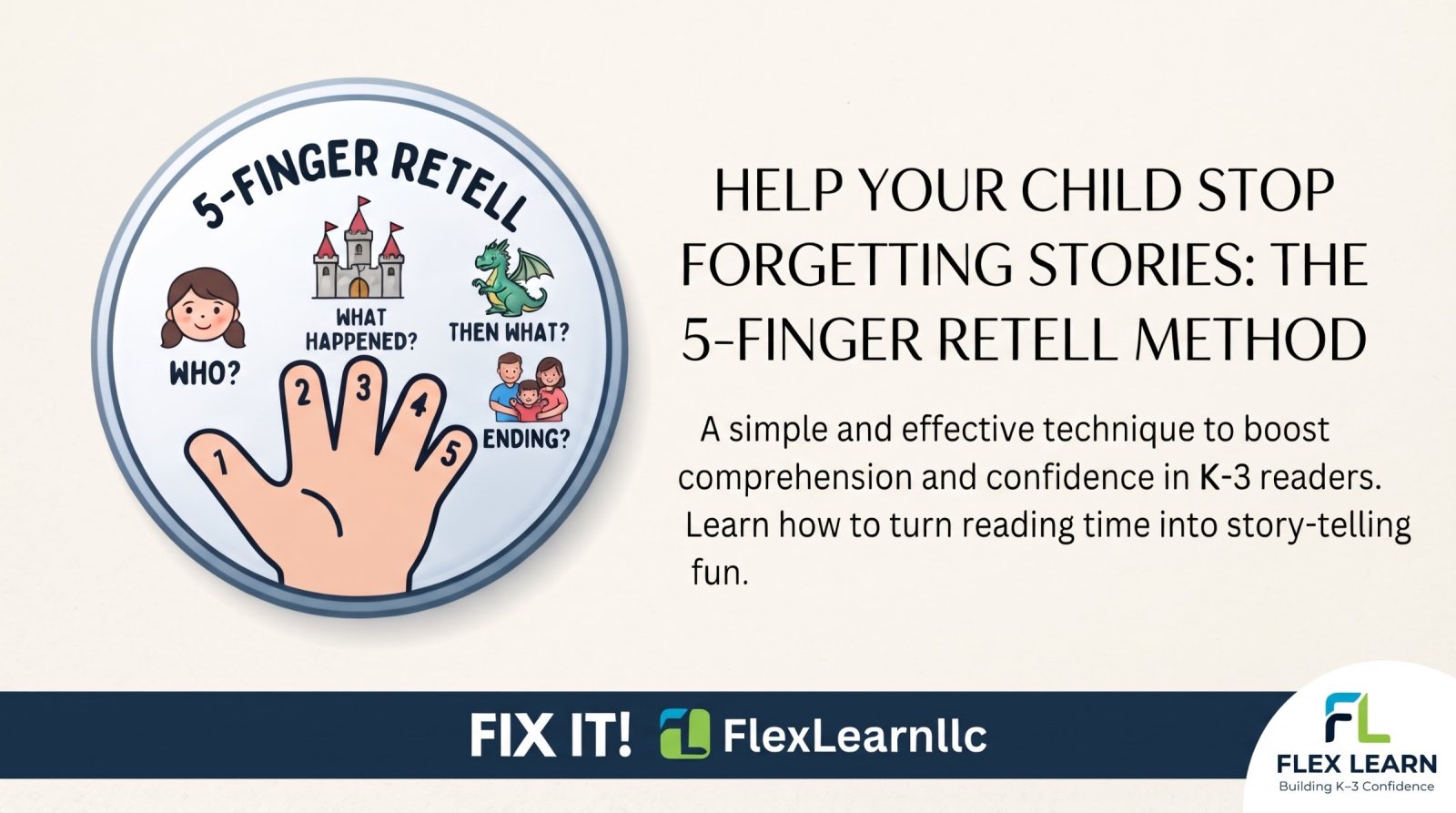
Reading
How to Build Reading Comprehension (When Your Child Can Read the Words But Doesn't Remember the Story)
Child reads smoothly but forgets the story? Bridge the gap at bedtime with quick "Who, What, Why" pause questions and the easy 5-Finger Retell method.
Read the article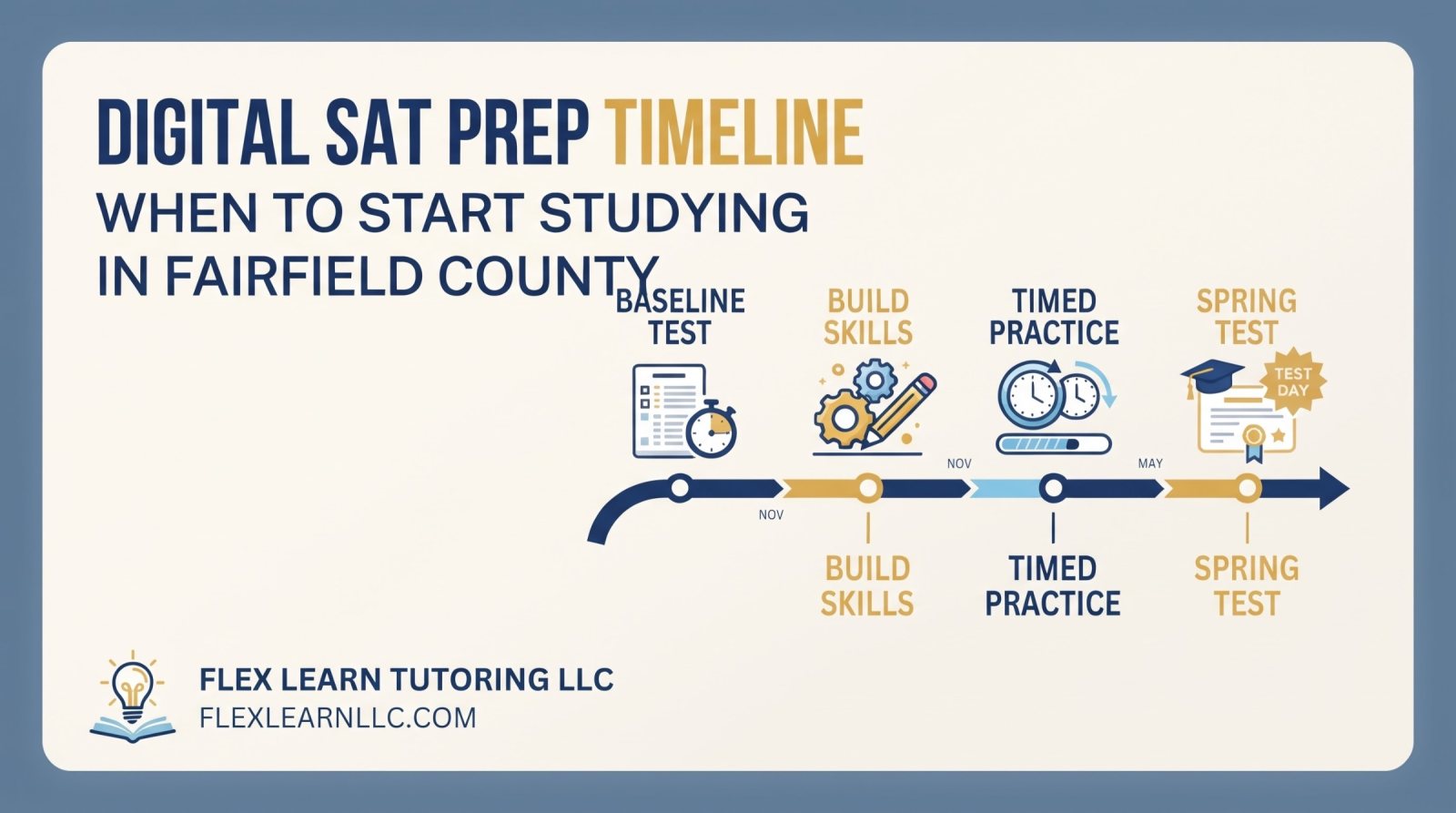
SAT & Test Prep
Digital SAT Prep Timeline: When Should Fairfield County High Schoolers Start Studying?
Planning for spring Digital SAT dates? Follow this realistic month-by-month prep timeline for 10th & 11th graders from Flex Learn Tutoring LLC in CT.
Read the article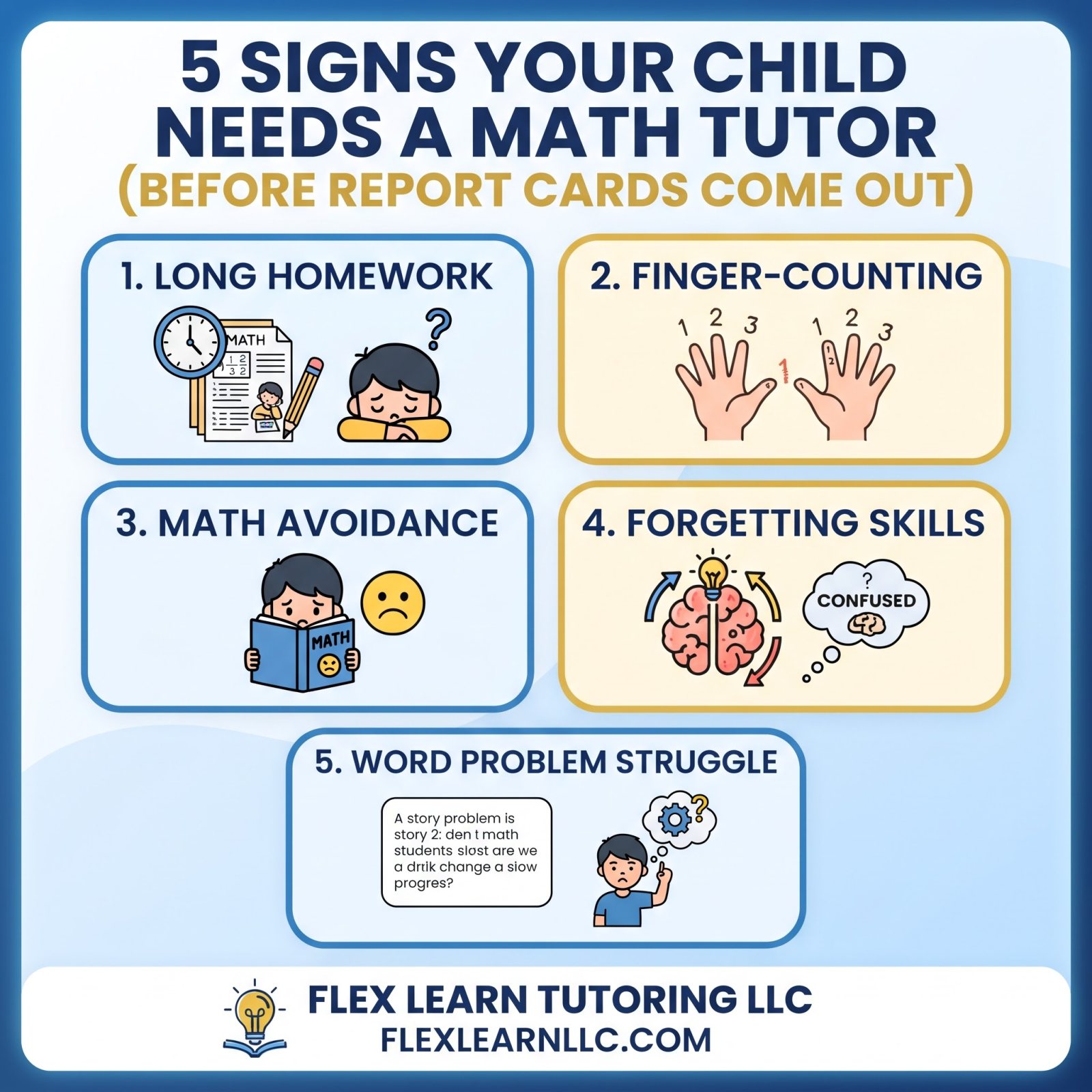
Parents' Tips
5 Signs Your Child Needs a Math Tutor (Before Report Cards Come Out)
Spot math struggles early! Discover 5 everyday signs your K–3 child needs a math tutor before report cards arrive—and how Flex Learn Tutoring LLC can help
Read the article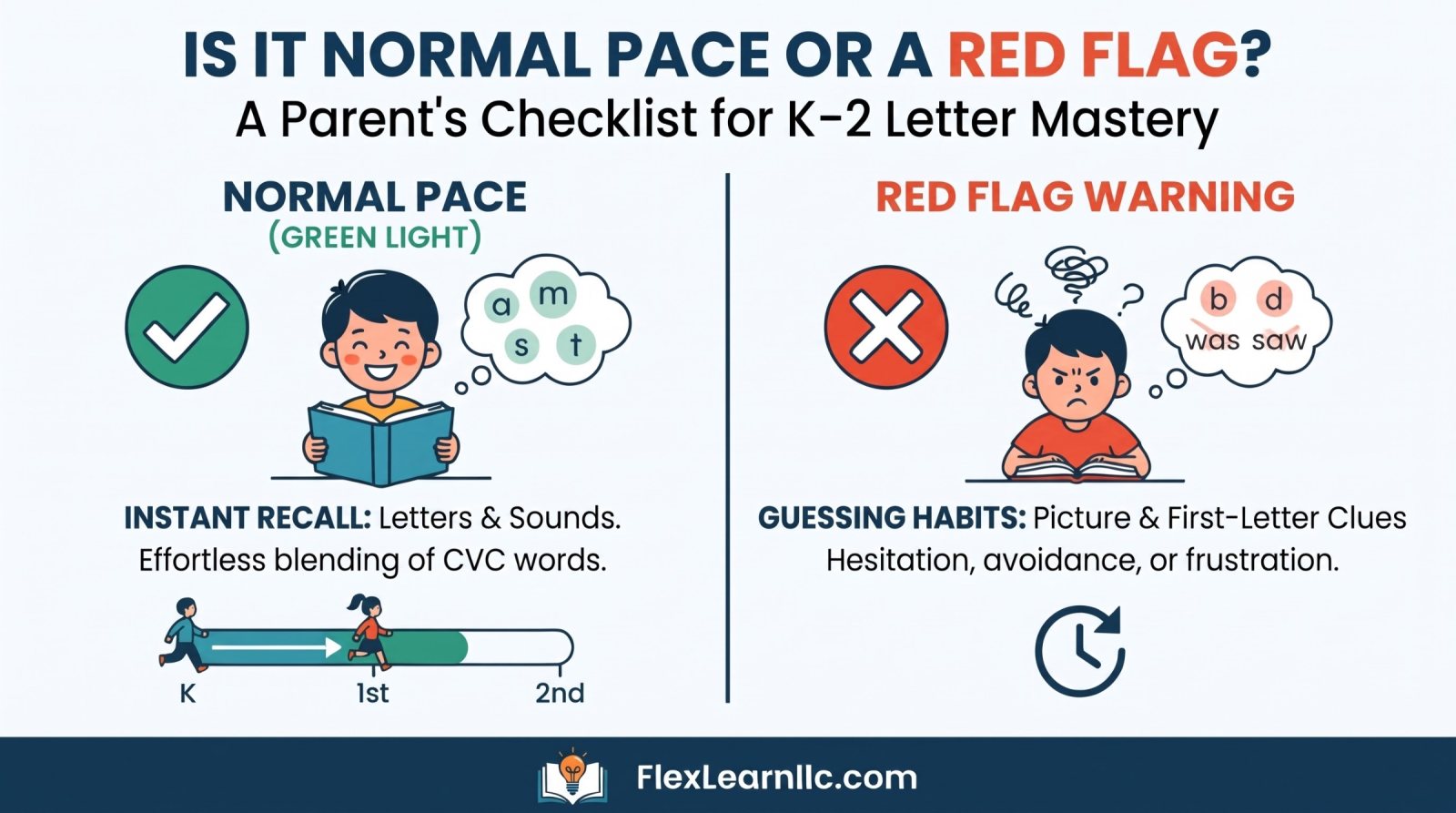
Reading
Is It Normal Pace or a Red Flag? A Parent's Checklist for K–2 Letter Mastery
Automatic letter mastery is essential for reading fluency. This checklist outlines K–2 benchmarks, five signs your child is guessing rather than decoding, and when early 1-on-1 intervention helps most.
Read the article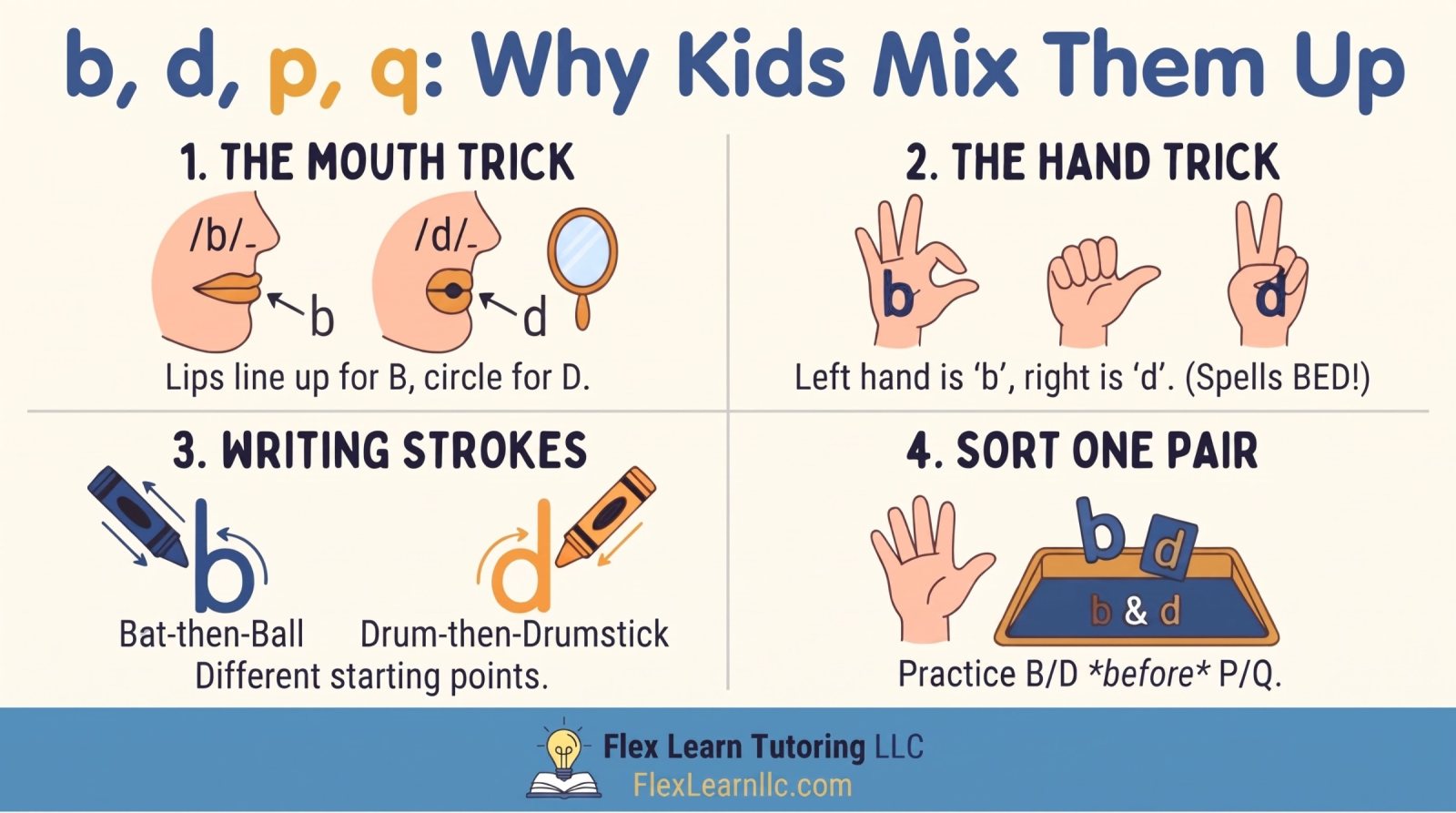
Parents' Tips
b, d, p, and q: Why Kids Mix Them Up and 4 Simple Tricks to Fix It
Mixing b, d, p, and q is a normal part of early development. Parents can fix it by mastering distinct uppercase letters first and using simple visual, mouth-shape, and handwriting cues—one pair at a time.
Read the article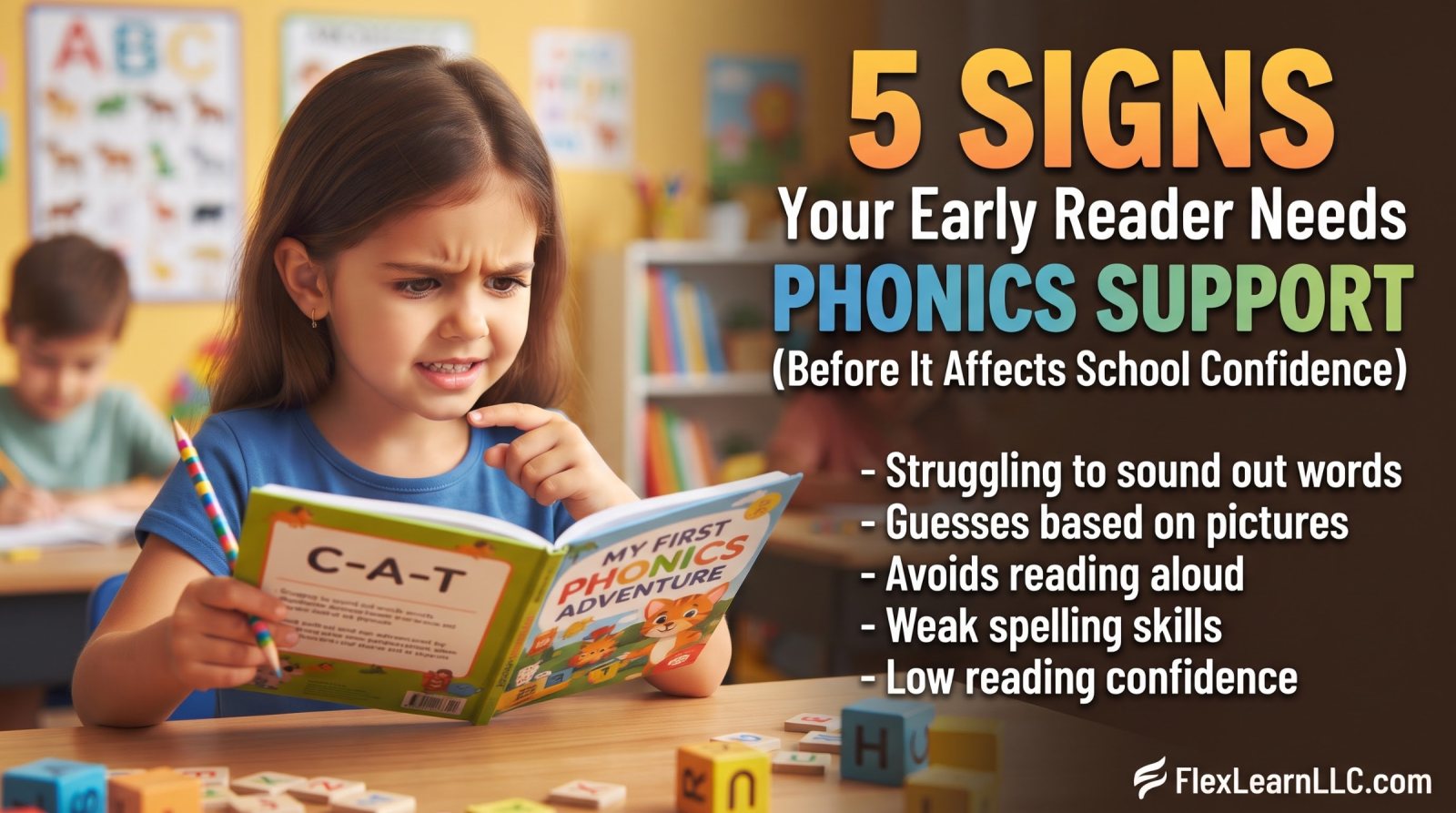
Reading
5 Signs Your Early Reader Needs Phonics Support (Before It Affects School Confidence)
Early literacy is the foundation of academic success, but many young readers struggle quietly before it impacts their confidence in the classroom. This guide highlights five critical warning signs that indicate your child may need targeted phonics.
Read the article
Homework
The Homework Battle: How to Create an After-School Routine That Actually Works
The evening homework battle is often a symptom of cognitive fatigue and an abrupt transition from school to home rather than a lack of willingness. By implementing a structured afternoon routine—complete with a decompression window, a dedicated workspace, Pomodoro timeboxing parents have a chance
Read the article
SAT & Test Prep
SAT Reading & Writing: Why Vocabulary in Context is More Important Than Memorizing Flashcards
Flashcard memorization falls short on the digital SAT, as the modern exam evaluates vocabulary through dynamic context rather than isolated definitions. By mastering context clues students can significantly improve their test performance and build lasting collegiate literacy skills.
Read the article
Parents' Tips
Math Anxiety is Real in Elementary School: How to Spot It and Shift the Narrative
Focuses on physical/behavioral stress signs, growth mindset, reframing mistakes, and eliminating timed pressure.
Read the article


